
Isle Royale: Michigan’s superior wilderness. The largest island in the largest lake in the world. Home to wolves, moose, and loons. I have aspired to hike this island for 50 years, since my first year at Y camp, where the older and toughest campers made their mark by circumambulating the island on blistered feet with heavy packs. Now, at 64 I return in a vain demonstration to fight back against the realities of older joints and an aging back.
Isolated, aloof, a small outcrop of ancient rock, this National Park separates itself with the moat of chilly Lake Superior. Untouched and untrammeled, a place where “man is a visitor who does not remain” thus meeting the official definition of the Wilderness Act of 1964. Here, after a difficult bout at work and in the face of a contentious election, was a respite. I had come once before, right after graduating college, with a small group of friends, and I was back again, this time with Anna and with our two most reliable travel partners, Jamie and Peggy.
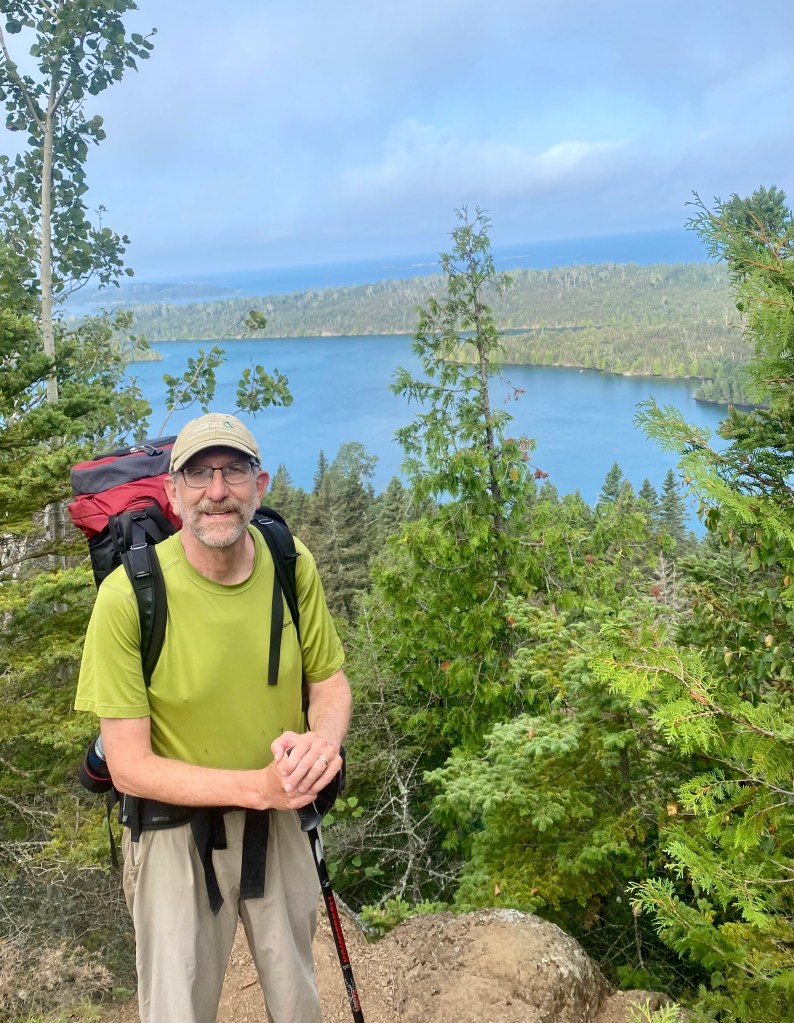
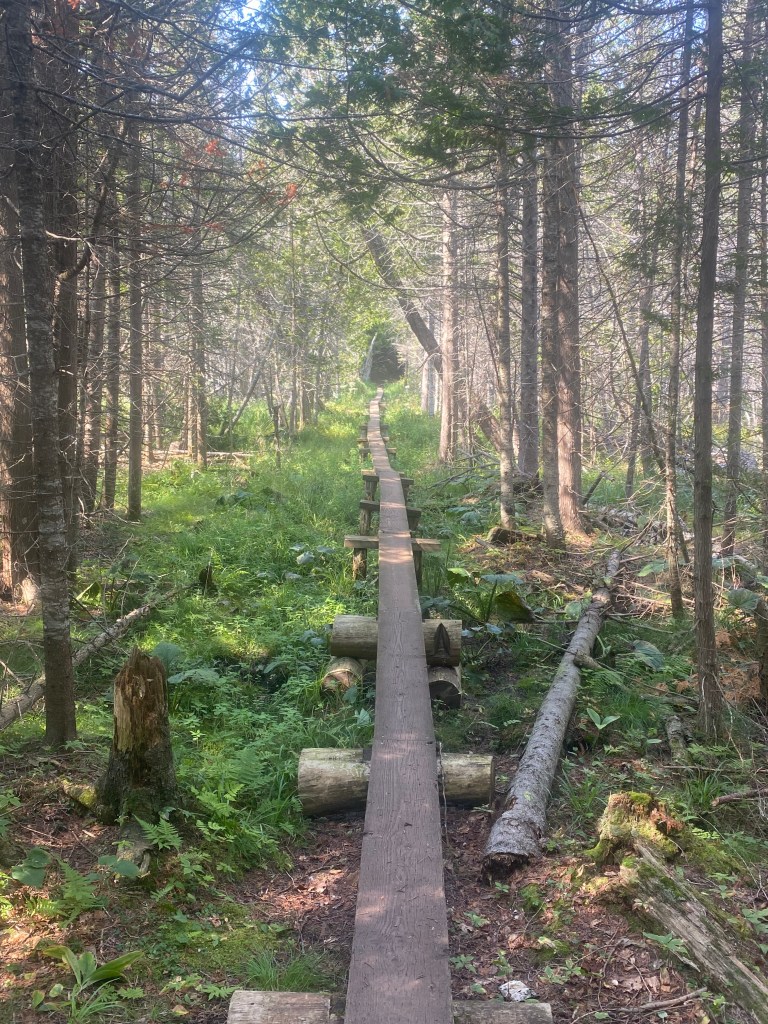
“Simplicity in all things is the secret of the wilderness and one of its most valuable lessons” wrote Sigurd Olson about the northwoods. Isle Royale offers escape and I was ready to disconnect. And it’s true: a week of walking, away from the internet, and living out-of-doors, left me restored and ready for the next chapter of life. But, I came back thinking not of isolation, but connection; not of wilderness, but of nature.
Water defines Isle Royale and on the first day of our adventure we take two canoes up one of the narrow channels tucked between the many fingers on the northeast end of the Park. The clear water marvelously allows us to study the rocks and geology that make up the island. Water also brought the first tourists to Isle Royale at the end of the 19th century when travel by boat was easier than car or plane. We quietly glide past a few historic cottages and cabins, unoccupied and tucked into the rocky shoreline.
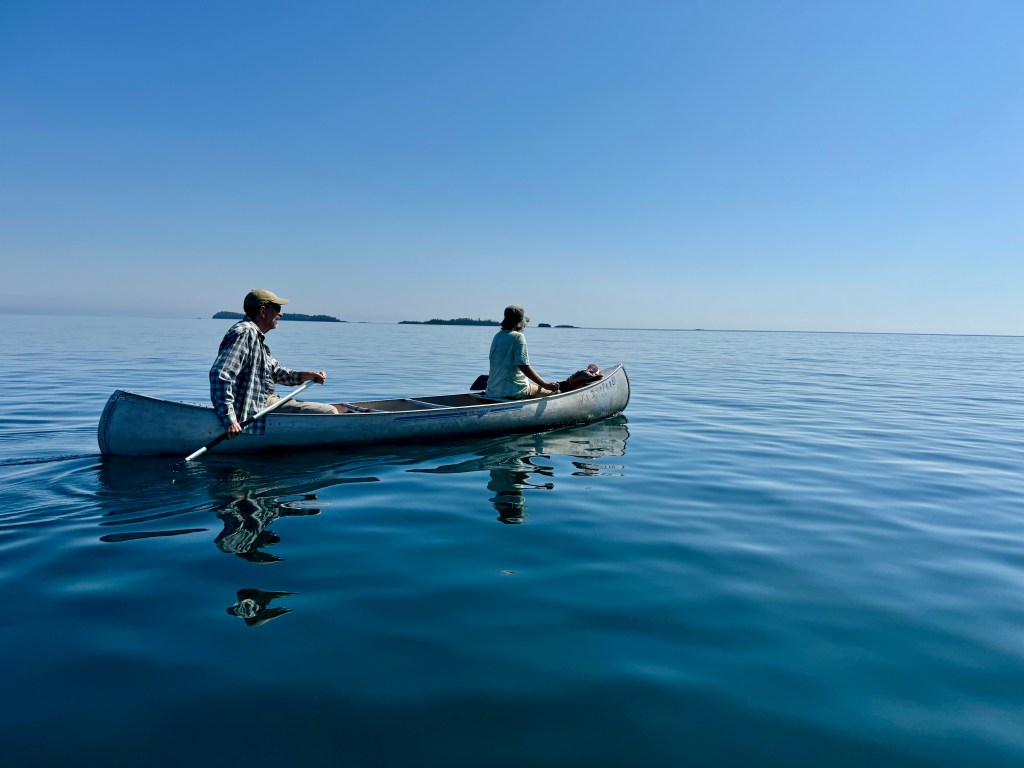
Many come to Isle Royale for a paddling adventure, but Park Rangers dissuaded us with tales of the rough, sometimes violent, stretches of Lake Superior that must be navigated to link cove to portage trail to inland lake for a week’s outing. Cautiously, we approach the open water at the end of Tobin Harbor and find the inland sea becalmed. We paddle out on a surface as flat and open as the blue expanse of a map which depicts the largest of the Great Lakes. We float suspended between a cloudless sky blue and a bottomless deep blue.
Moving across the solid surface of the island the next day is not so easy, but hiking is why we came. “Roots or rocks” most commonly describes an Isle Royale trail, and on our first day we encounter many of both, as well as long stretches of trail overgrown with big-leaved thimbleberries or bracken that make it challenging to see where to safely place a foot. But we are rewarded with views as we hike down the Greenstone Trail, which runs the length of the island spine.
One of the joys of backpacking is to travel to a campsite without any electricity or RVs and to pitch a tent along the empty shore of a big water or flowing stream. The Park Service has done an excellent job locating these on Isle Royale and in most places has also built simple wooden lean-to shelters that give one both protection from weather and a sense of isolation. Our first night out we find a campsite to ourselves and mostly out of sight and earshot of a few others.
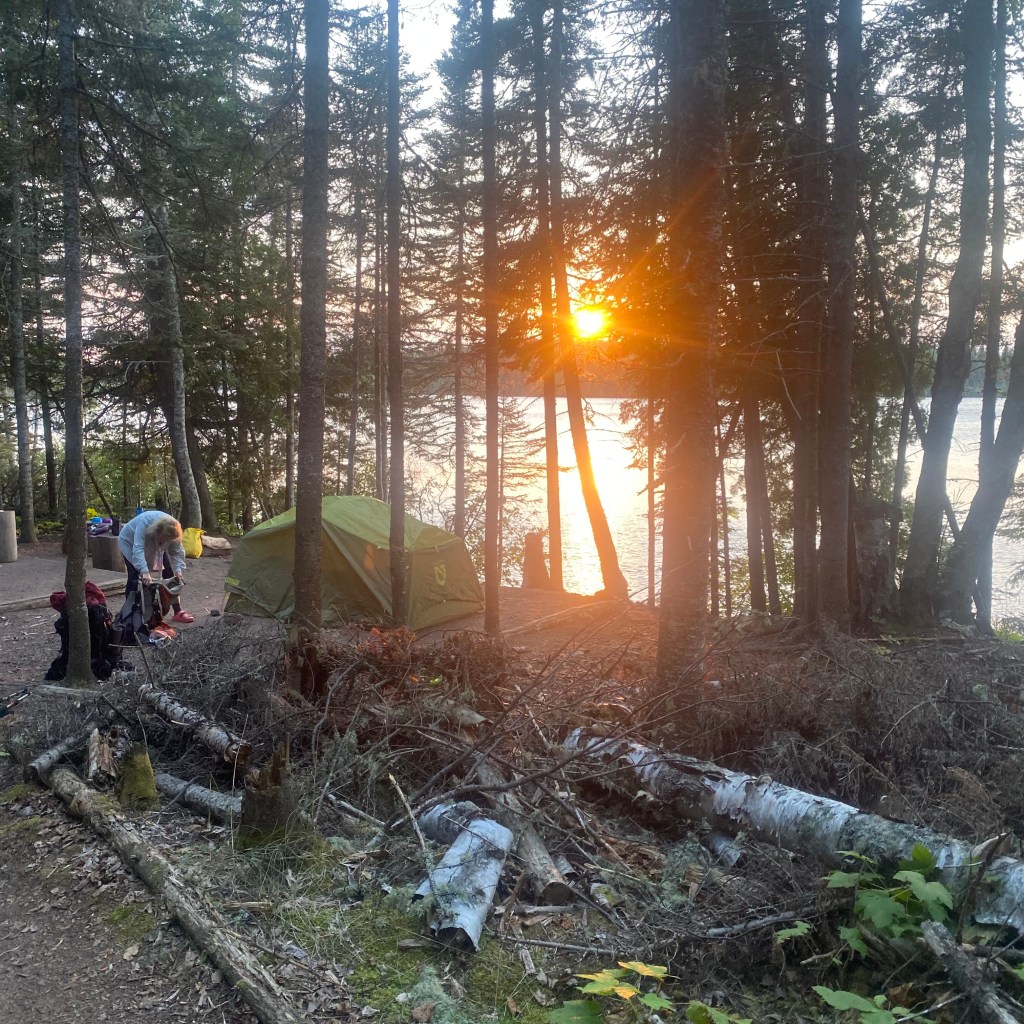
It is simple living to focus one’s energy on securing drinking water, fixing a meal, and preparing a place to shelter the night. The only diversions are a refreshing swim in Lake Superior and the sunset. I may be getting too old to sleep comfortably on the ground, but the new technology of a small air mattress and a long day of exercise allow for a decent night. We awaken in the pre-dawn darkness to the eerie sound of two loons calling to one another across the silent waters of Lane Cove. I am lying on the earth, next to the person I love, self-contained, and touched by the mystery of our existence.
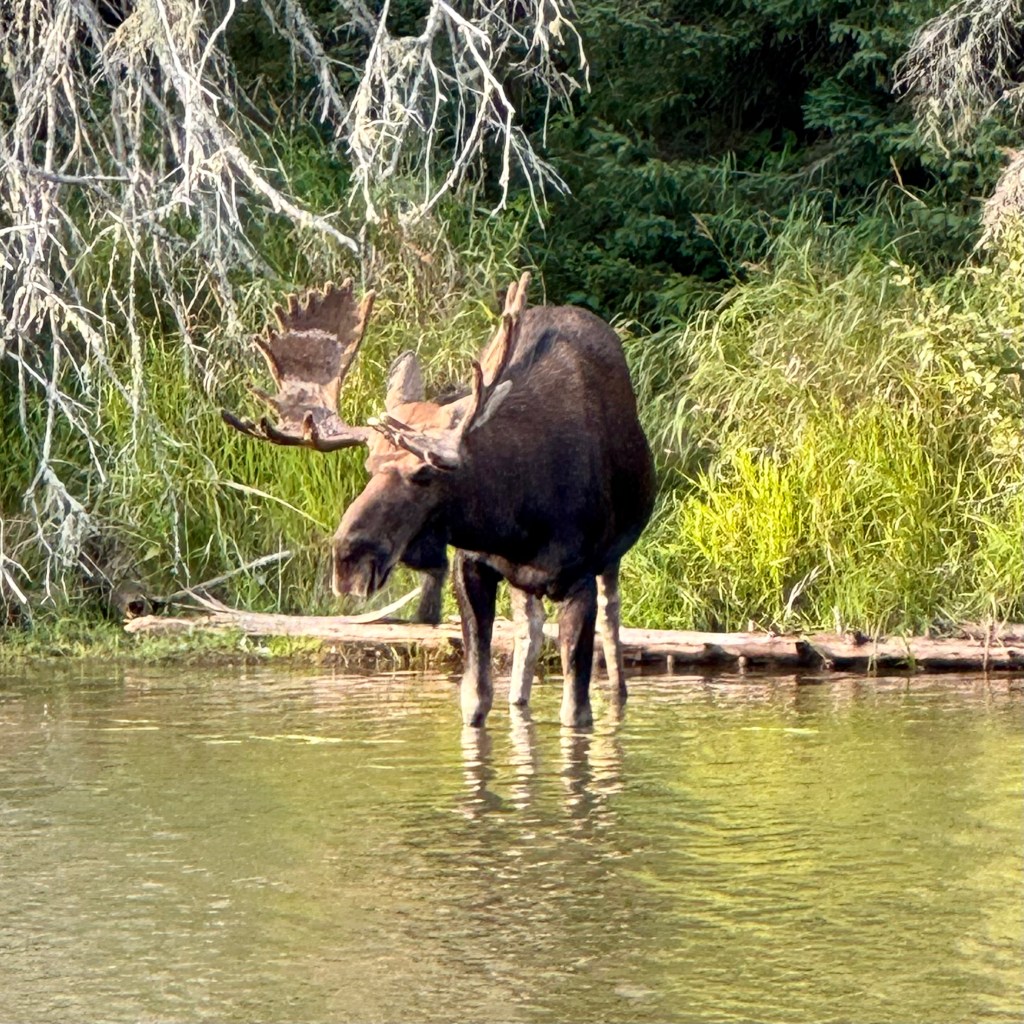
Isolation and independence are what an island wilderness offers, and the next six days gives it to us in full. Empty trails, views of unbroken woods and water, hard climbs and long hikes, the footprint of a wolf, a moose walking into the stream in front of our campsite, and the satisfaction of carrying, and carrying out a plan to provide, all we need for a week’s survival. “The farther one gets into the wilderness, the greater is the attraction of its lonely freedom,” wrote Teddy Roosevelt.
But Isle Royale is not as disconnected a place as our myth of the wilderness might have us believe. It starts with its geology. The ridges that run the length of the island, and make it so hard to hike north or south, are the worn ends of hard layers of ancient lava flows, and if one were able to follow the beds of basalt down as they dip under Lake Superior, you would find the same stone across the big lake on the ridges of the Keweenaw Peninsula where they tilt up to the surface again. Early geologists in the 19th century quickly saw the similarities, but several attempts to mine the same copper on Isle Royale were all for nought.
Our current geologic age may be called the Anthropocene, a time where humans have left a permanent impact on the planet through the use of nuclear weapons, and the burning of so much fossil fuels as to change the chemistry of the atmosphere and the oceans. The warming of the planet has an impact everywhere, even on Isle Royale, where hot summers have spawned several harmful algae blooms on inland lakes, a problem we usually associate with Lake Erie. The burning of coal throughout the midwest has also led to airborne deposits of mercury that show up In fish caught on and around Isle Royale.
Wilderness can be defined as a place where humans only pass through, but no where does nature exist without being touched by the planet’s most powerful species. There are days when I decry this reality, but the converse is also true. Humans have the ability to care for nature, to protect the most special animals, plants, and their habitats; perhaps no where is this better demonstrated than in our National Parks.
Isle Royale is famous for wolves and moose and the study of the interaction between these two species. While this is mostly a hands-off process of observation, in 2018 the Park Service, after much deliberation, made a profound decision to intervene and prevent the extirpation of wolves from Isle Royale. Over the course of a year, 19 gray wolves were relocated from Minnesota to the National Park, and since their re-introduction wolves have thrived on Isle Royale. The Park Service continues to take special care to help the wolves stay wild, and we—like many other visitors—were excited to find a wolf print in soft mud and hear stories of wolf sightings by fellow hikers. Read here the story of this successful intervention and see a video of the first wolf release
Isle Royale reminds me that we all have a literal and figurative footprint as we travel through this world, and we can be intentional both individually and collectively in the impact we will have on the places we either inhabit or visit. An ethic of wilderness preservation guides the Park Service in their management decisions about Isle Royale, but they work hard to be both facilitators and educators for human visitors. Perhaps we can think of them, and ourselves, as caretakers of a special place so that it can be enjoyed both now and in an ever-changing future.
Wilderness and special places should not be protected as some delicate museum object marked off by “do not touch” signs. We are a part of nature and need to be able to experience it with all our senses, and appreciate all that it does for us. Some places, like Isle Royale, need to be handled with care, but we can no more separate ourselves from nature than from the air, water, and food we need to survive.
Perhaps we need to consider wilderness not as a last place to be preserved for some darker future, but as the epitome of nature that can inspire us in our daily lives, no matter where we live, and help us build a better world. Rather than separating nature off into some remote island, can we take the best of nature and bring it into our daily lives? Here are a few thoughts about how and why to do so:
- Wildlife is everywhere: I went to Isle Royale hoping to hear a wolf, and perhaps see a moose. We saw a moose on our last few days, but on the first day an eagle soared overhead, on the second we saw loons and mergansers diving in a calm cove, and on the third a pair of sandhill cranes flew over us on the trail. Birds are much more common than wild predators, and usually can be seen out our back windows. Celebrate the color, diversity and wonder of birds, insects, and amphibians close to home.
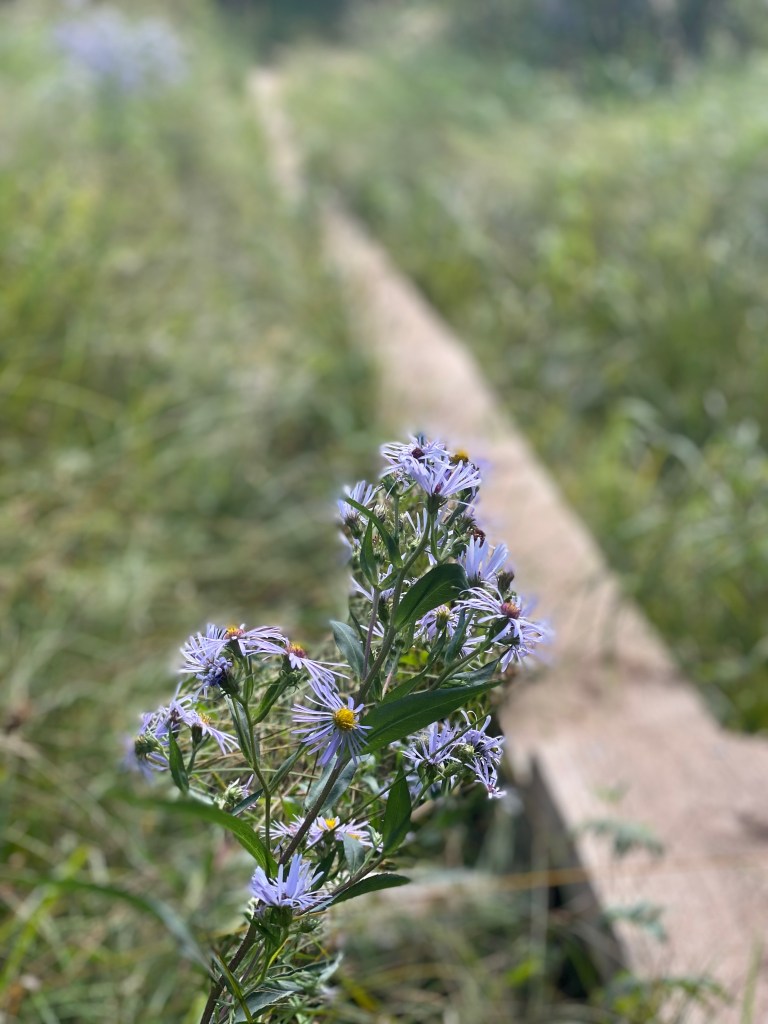
- Look for interesting habitats: Isle Royale does not have a tall landscape like many western National Parks, but there is beauty in the interplay of rock and water, the flowers of small wetlands, the moss of the forest floor, and in the wide open sky of Lake Superior. All around us are small places that contain interesting communities of plants and animals. Seek them out and explore what’s under our feet. And, when you find yourself in a place with big sky, stop and look up, especially on a clear, dark night.
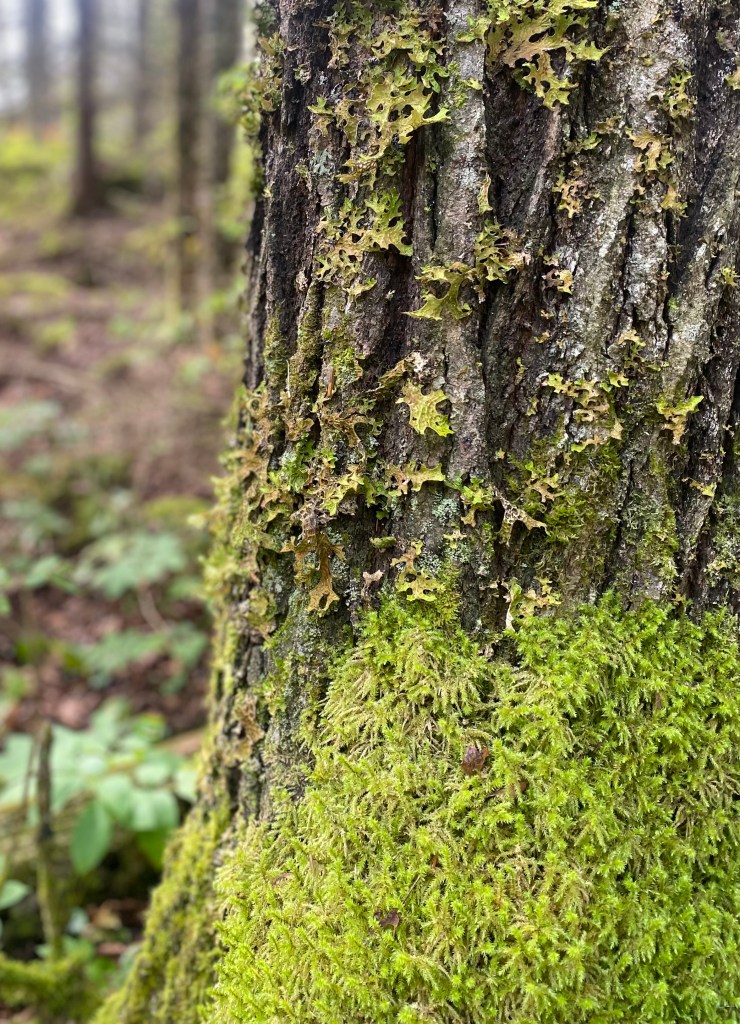
- Get outside: a week in a wilderness simplified and slowed down my life and connected me to the that which is bigger than what I know. But I am reminded that at a walk in the country on a Sunday morning, or even a lunchtime moment in the garden or park bench can restore my sense of well-being. Let’s take advantage of the nature that is close to us.
- Don’t go it alone: yes, wilderness often gets defined as a solitary experience, and I have certainly been strengthened by time alone in the out-of-doors, sometimes for days at a time. But it means so much more to share it with others. There is a feeling of cooperation, common purpose, and shared achievement. Something about an island also has you seeking out others to be a part of the experience. We shared trail tips, wildlife sightings, and boat rides. At crowded campsites, the Park Service gently reminds you to “expect to have conversations about sharing sites.”
- We weren’t here first: climbing over ancient rocks and sleeping on the ground, hiking among cedar trees and birches as big around as a parking garage pillar, and paddling past 100 year old cottages in the wilderness reminded me that the natural world is on a different timeline. People have been enjoying and carrying for special places long before there were national parks. In recognition that there were others here before us, a ranger told us that the place at the western end of Isle Royale will soon be renamed Ozaagaateng, which translates to the “place of light” in Ojibwe.
A week of carrying heavy packs on tough trails had my body painfully remind me that I have been walking for more than six decades. And while I hope to keep hiking and getting out into nature for many more years, I know that my time on the planet is limited. Late one night on Isle Royale, a few hours before dawn, my aging body sent me out of my sleeping bag and into the dark. It had been raining earlier and patchy clouds covered most of the sky, including over a bright moon. But one large opening of sky held the constellation we call Orion, what the Ojibwe call Biiboonkeonini, the winter maker.
Terry Tempest Williams, the Utah author, wrote about her affection and concern for our national parks in a book The Hour of Land (see my review National Parks Turn 100). On her visit to Acadia, another national park with a rocky shore, she was reminded “why these places of pilgrimage matter. They matter to me because in the long view, I do not.”


beautifully written!
LikeLike
I would love to experience “suspended floating between the cloudless sky blue and the bottomless deep blue” on your lake! Sounds lovely!
LikeLike
Your week on the island came right at the end of the old arrangement. You slept in the wooden lean-tos you praise, found a wolf footprint, watched a moose walk into the stream at your camp. Last winter’s aerial count found 37 wolves in three packs, pups raised in all three, and that moose’s herd is down to 524, its lowest since 2007. This season the park suspended tent and hammock camping at Three Mile, Daisy Farm, Moskey Basin and Caribou Island from August 28 through the October 31 closing. Wolves at the developed campgrounds learned that food bags come from people. One wolf was removed last August, the first such action since the wolf study began in 1958. The 32 shelters stay open under new food-storage rules, so a Greenstone trip like yours is still possible this fall. It just has different rules about dinner.
Your Wilderness Act line, that here man is a visitor who does not remain, reads differently now. This season the island is teaching people how to camp around wolves that stopped being afraid of us. The wolves learned to visit our campsites instead.
I write field notes about real places, walked from a distance (maps, park records, street view), and Isle Royale is one I have gone over line by line. Your post is the best first-hand account of the Greenstone I have read, so thank you for it.
LikeLike