
Beech trees saved Europe 11,000 years ago. Maybe trees can again help humanity secure its future. Forests fill my senses as I climb up the steep sides of the dense woods above the village of Lodano in Ticino, the southern canton of Switzerland. I am looking for fagus sylvatica, the European beech, but most of the trees here are oaks and alders. This hillside a hundred years ago held cows and goats grazing among a few chestnut trees, but a forest has since regenerated. Stone walls from that time still cut through the forest. It could be Vermont, but the stones are long and angular, not rounded granite.
The chestnuts still stand, their short trunks bigger around than many of the oldest white pines in the Great Lakes. But they are squat, misshapen trees with thick, fissured bark, in no way similar to the towering poles of Michigan’s State Tree. The tortured lumps of chestnut sprout many branches in various directions. Some look like inverted pyramids that support a stand of six or seven normal trunks growing up towards the light. The chestnuts have been damaged by storms and by coppicing, the purposeful pruning by the Italian Swiss who have lived in this area for centuries.
My wife Anna and I climb for well over an hour, stepping up on ancient granite pieces carefully placed to make solid stairs, but particular in their knobby surface so as to require vigilance in step after step. Then the switchback of steps cease and we walk on thin soil into a stand of birch trees, white-trunked but without the peeling paper of the birches in the Northwoods. The stone walls are gone, but we come across a compacted dirt platform framed by a foundation of thin rectangular rocks. Atop it stands two aging logs joined in an an upside down V; a heavy metal wire running from it down the steep slope, soon lost from view in the young forest. It was here at the turn of the last century that loggers attached logs to a primitive zip line to ferry them down to the valley floor.
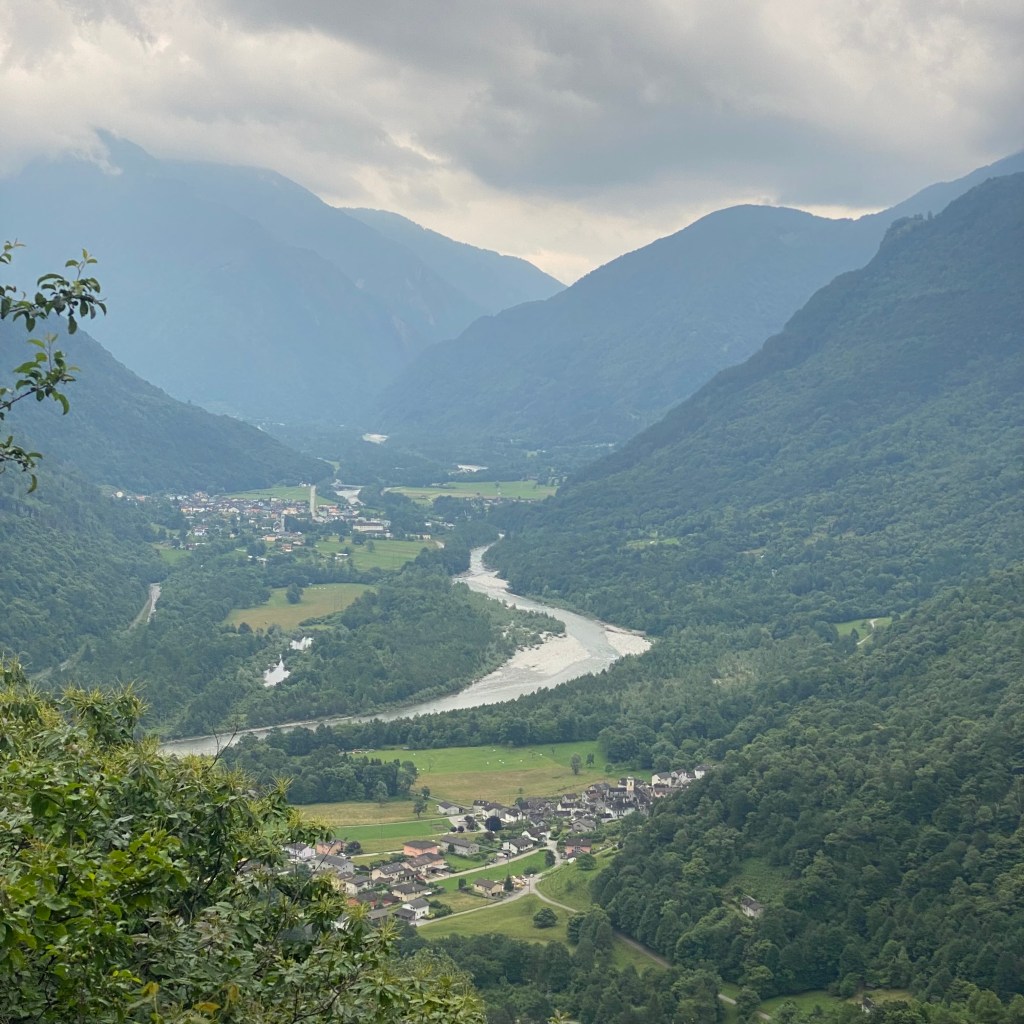
Finally our climb ends and we come out into an opening with a view down the Valle Maggia, the U-shaped valley holding the Maggia River, a ribbon twisted with white stone amidst green fields and textured patches of trees. We veer left, follow along a contour, and pick our way over and through rock outcroppings amidst oaks, birches, and yes gray-stemmed beech trees. But these are not the elephant leg trees I expected. The few poles stand uncertain, with many branches.
Across the way, whenever the trees thin, we can see a wall of green, getting ever closer. We work our way up and into the Valle di Lodano. Then, after a short stop for lunch, the less rocky trail descends to a dry creek. Oddly, we can hear rushing water, echoing off the opposite canyon wall from an unseen stream. The trail begins to climb, then curves, and we come into a true beech forest of age and magnificence.
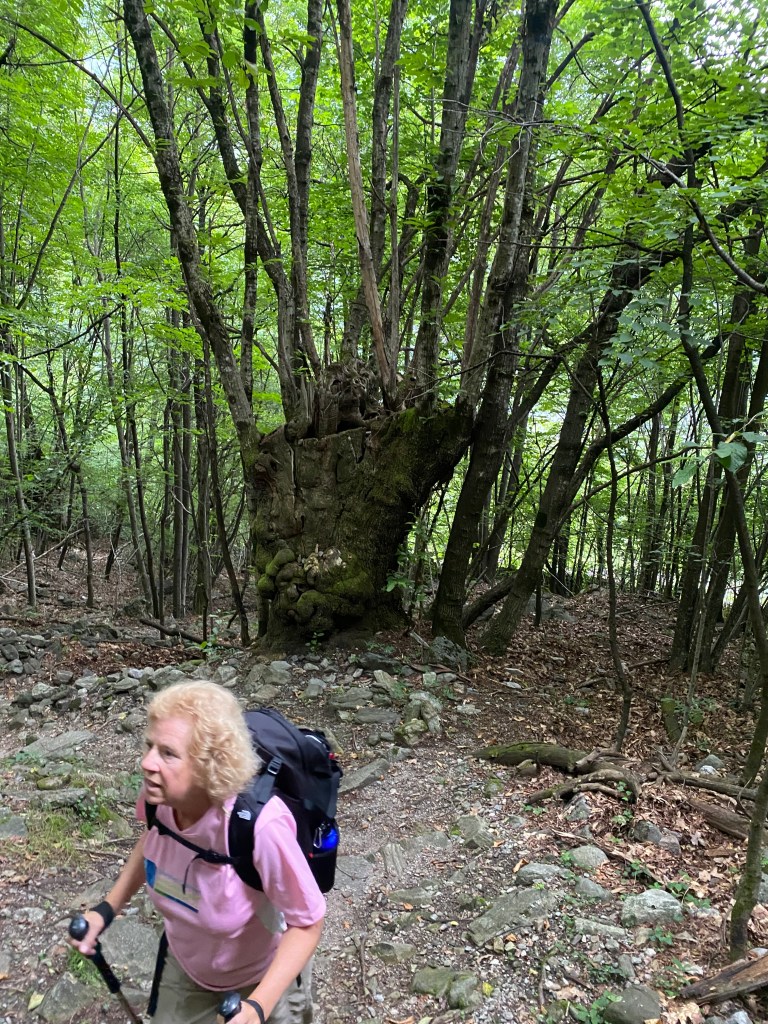
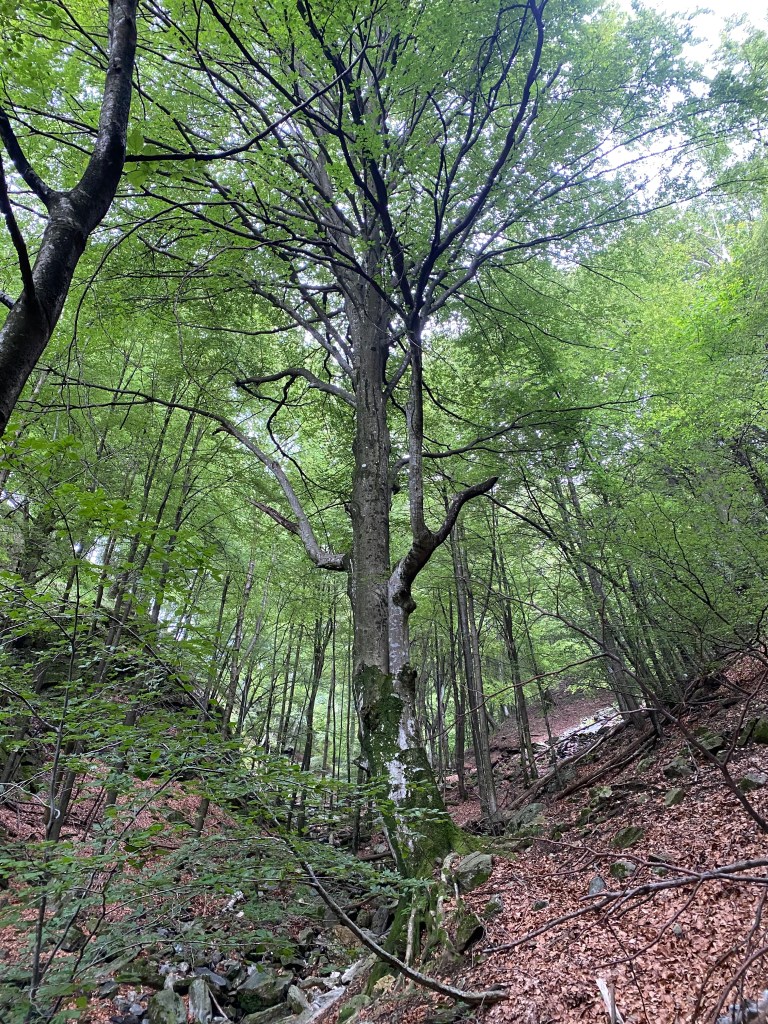
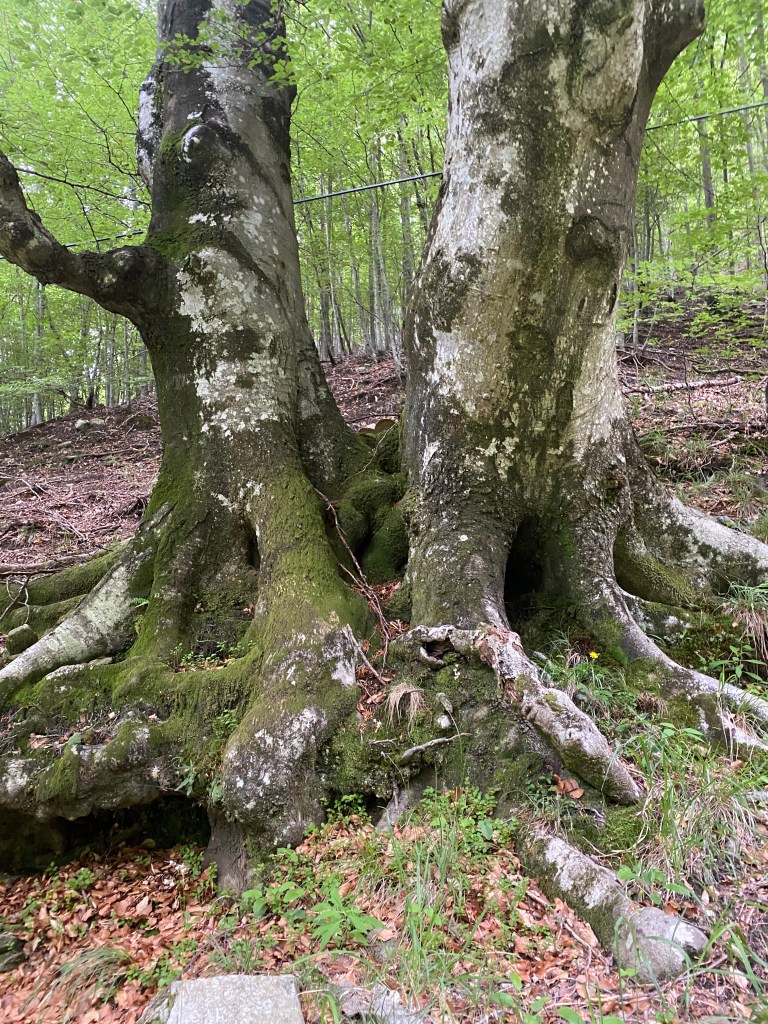
The European beech is similar to the American beech fagus grandifolia. The shape of its leaves are familiar, though the teeth on their edges are not as sharp. It has the same characteristic grey bark that stands out in the sandy-soiled forests on the shores of the Great Lakes. The large trees we approach are smooth, without wrinkle, but more mottled with patches of white lichens and thin green moss. Many of the tree trunks exceed our width and tower up to a high canopy; I feel small in size and significance.
Our feet kick through a deep litter of light brown beech leaves, and in the narrow defiles of the canyon they pile up like crumpled tissue. In the few flat places, the cracked husks of beech nuts crunch thick underfoot. The steep trail demands we stop, and we look up and around into a green-ceilinged cathedral, shafts of white light animating the quiet. All is still except for my beating heart.
“These forests,” proclaimed the United Nations Educational, Scientific and Cultural Organization (UNESCO) when naming this and similar places World Heritage Sites, “contain an invaluable population of old trees and a genetic reservoir of beech and many other species, which are associated with and dependent on these old-growth forest habitats.”
The Ice Age let go of this valley about 6,000 years ago. Before then, successive waves of glaciers carved the lakes and valleys of southern Switzerland. While much of the continent was covered in ice, the top of some of the Alps peaked through and a few valleys were ice free; further south in present day Italy and Greece and west, beyond the Carpathian Mountains, were vast forests of beech trees and other species. As the final ice age began to end about 11,000 years ago in Europe, the pollen of beech trees drifted in warming winds, and as conditions improved strong years of beech nut production spawned the growth of spindly grey saplings. Slowly, then quickly, the beech forests spread into Switzerland and onto the shrubby grasslands over what is now Germany, France, and even across to England.
Beech trees established the forests of northern Europe, and over thousands of years, the trees of these forests grew, died, decayed, and built up rich, organic soils. As the forests were cleared, the wood was used for fuel and structures and the fertile soils supported early agricultural practices. Then, as civilization advanced, beech trees were logged, split, and stacked into slow-burning piles to produce charcoal. Charcoal burns at a hot enough temperature to support basic iron production and the tools of civilization were forged. If not for beech trees, would we enjoy the many benefits of modern life we now take for granted?
But over time, beech forests were eliminated. In 700 BC, it was estimated that beech forests covered 10 percent of Europe. Now, natural beech stands cover only 0.02 percent of their original area. In 2007, UNESCO recognized the importance of these old growth beech forests and began an effort to identify and protect 94 stands in 18 countries in Europe. Many of these forests grow as rare islands in a sea of agricultural landscape. Others are revered as places of refuge, mystery, or connection to something beyond civilization. Some have served as film sets. And, it was a beech forest that Peter Wohlleben tended; he was inspired to share his personal knowledge in the acclaimed book, The Hidden Life of Trees.
“We are part of Nature, and we are made in such a way that we can survive only with the help of organic substances from other species,” writes forester Wohlleben who asks us to rethink our relationship with trees. While many forests now endure because of deliberate human actions — commercial timber practices, the planting of seedlings, the creation of parks, landscaping desires, and the protection of wild areas — “we should not be concerned about trees purely for material reasons.” Old growth forests, in particular, should be revered for their own sakes: the diversity and persistence of lifeforms present, and the tangible connection they provide us to that which is greater in comprehension and longer in years than our own brief lifespans.
In recent years, we have come to recognize old growth forests not only for their unique ecosystems, but for their role in the fight against climate change. The basic life function of a tree is to take carbon dioxide out of the air and through the magic of photosynthesis convert it into carbon compounds for the growth of leaves, branches and supporting structures. Over time, carbon is stored in the wood of a tree trunk, but much more is steadily shed to the ground and decays into the soil. In a dark, shaded forest the carbon builds up organically in leaf litter, rich humus and eventually soil. Given several millenia, and the geological forces of shifting continents, this organic matter will turn into coal.
Humans of course long ago discovered many uses for wood: structures, furniture, and paper products, as well as a source of fuel and heat. Thus, we cut down forests as they grow, and then plant them anew. Seeking the efficiency of farming, we clear whole forests and cut them again in less than a generation. We now select fast-growing tree species based on natural geography and the expected use of the wood product. Thus, certain conifers, pulp trees, and speciality wood trees like maple have come to dominate landscapes that once contained old growth forests of slow-growing giants.
“Don’t lose the forest for the trees” is practical advice to consider the worth of a system that exceeds the value of its individual components. Lost in the practice of forestry, where the primary goal is the growth of trees as measured in board feet per year, is the slow accretion of soil and the steady growth of large carbon-rich trees. In our current times, old growth forests may have the greatest worth as carbon sinks, and saving these ancient ecosystems may be one of our most important weapons in fighting climate change. Those of us in the US tend to think of old growth forests as the towering redwoods and other conifers of the West Coast, but we find them in the cypress swamps and long-leaf pine forests of the south, stands of oak and hickory in the Appalachians, and the maples, white pines, and hemlock that make up the Northwoods around Lake Superior.
Sadly, in North America, beech forests struggle. Once, before the arrival of white people on this continent, beeches were a big part of the dominate mesic forest of eastern North America. As in Europe, they helped create productive agricultural soils. Beech nuts supported a wide range of wildlife, including the now extinct passenger pigeon. The wood from beech trees tends to warp and crack, and thus many tree farmers favor other species. More devastating is the scourge of beech bark disease, a fungus spread by scale insects. It causes beech trees to weaken and lose their large limbs or tops in high winds. Nonetheless, some of my best forest memories — from Warren Woods in southwestern Michigan to trees atop Pictured Rocks — are colored grey by beeches.
While disease slows the growth of beech trees, the greater threat to the forests of North America may be the economic forces that have come to view trees as commodities to be traded and forest land as an investment vehicle for Wall Street. The timber companies that supported the homebuilding boom after World War II and the production of paper for an increasing number of uses are less and less likely to own the forests that are the resource base of their industry. Instead, timber investment management organizations (TIMOs) have come to own more and more of the private forests in the Northwoods and elsewhere. Their time horizon is in years, not the decades of old school timber companies, or the centuries that are the natural time period of a forest.
Fortunately, much of our forest lands are in public ownership, and as we come to appreciate the role of old growth forests as tools in fighting climate change, more will be protected. In his second year, President Biden issued an executive order calling on his administration to “institutionalize climate-smart management and conservation strategies that address threats to mature and old-growth forests on Federal lands.” The US Forest Service is now close to putting in place new rules and management practices to protect old growth forests on the land it manages.
As well, as we better recognize the economic interests of forest owners—TIMOs, traditional timber companies, and even small scale family forest owners—and their particular motivations, new methods are being developed to pay them for the service they can provide for fighting climate change. Now the private sector is employing climate-related investment tools to protect old growth forests in the Great Lakes region (see my account of a trip to the Michigamme Highlands). With the active participation of indigenous residents, local and state governments, and other non-governmental organizations, The Nature Conservancy is working to protect and promote the Northwoods for mutiple environmental and ecological benefits.
We need to rebuild our culture around forests but in a way that honors their longevity. The climate crisis reveals to us that our existence depends on our being in synch with the time frame of the earth. We have developed a civilization that is now capable of either destroying the natural systems that govern the planet or deploying technologies and practices that preserve the biological and chemical processes that keep the air at the right composition to moderate temperature, the water clean enough to drink, and the soil healthy enough to grow our sustenance. Trees have been there through it all, from our first fires to the fight against climate change.
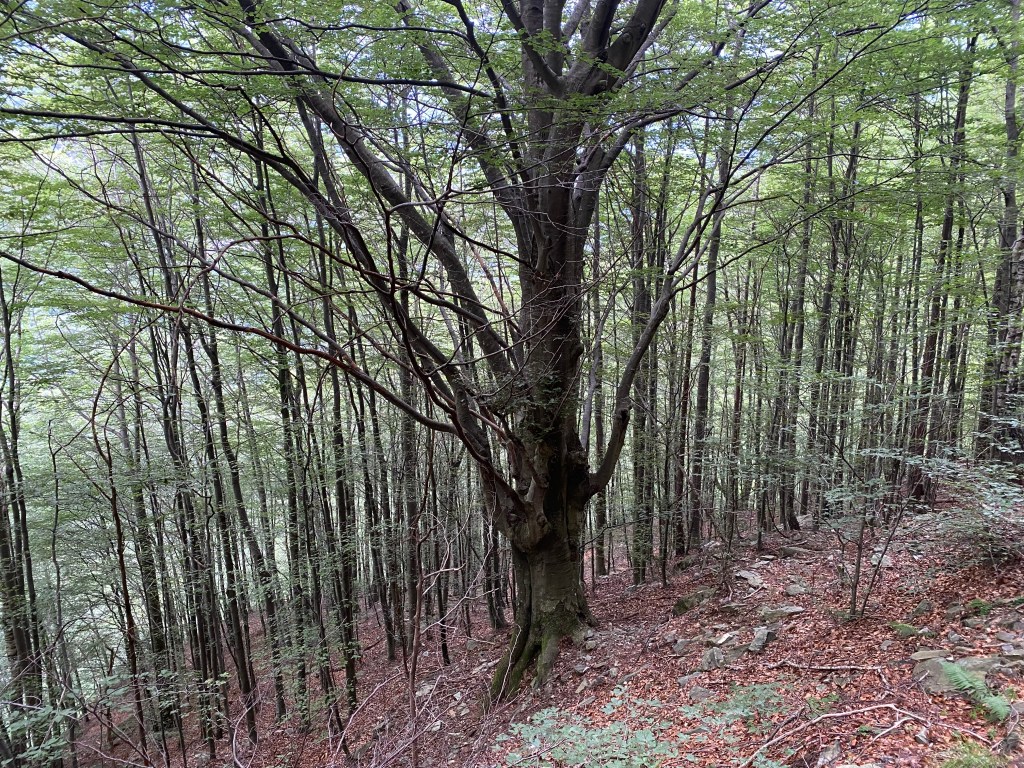
The beech trees in the Valle di Lodano are survivors. A dense system of roots secures them to steep hillsides and connects one tree to another in a network of mutual support. They trade energy and information in a complex chemical system, and when a forest is damaged by storm or even denuded by humans, the trees can recover. Beech trees are prolific and we hiked past a whole new family of saplings spawned by a single mother tree. While lost to logging and charcoal production in the last two centuries, the remnant beech forests continue to spread across a wide variety of soil types and climatic conditions. They may yet again regenerate the landscape of Europe.
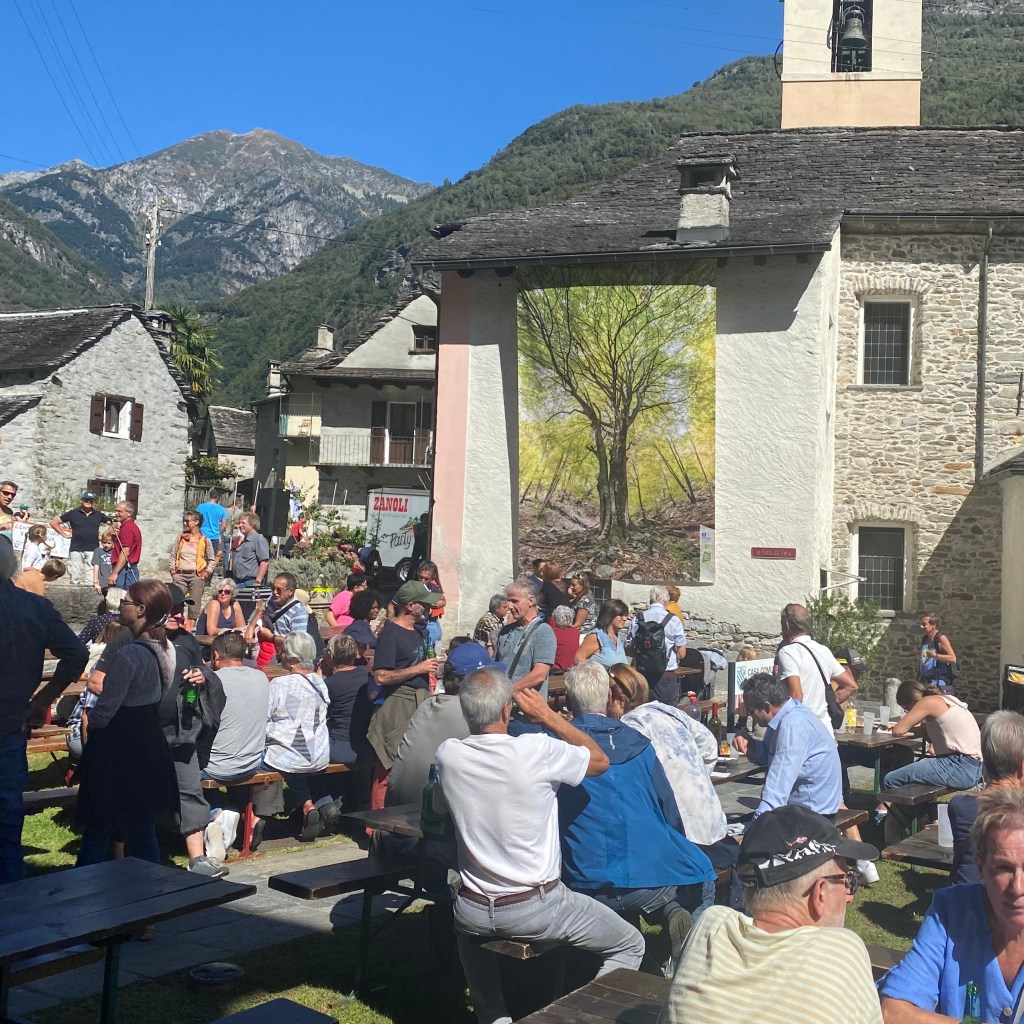
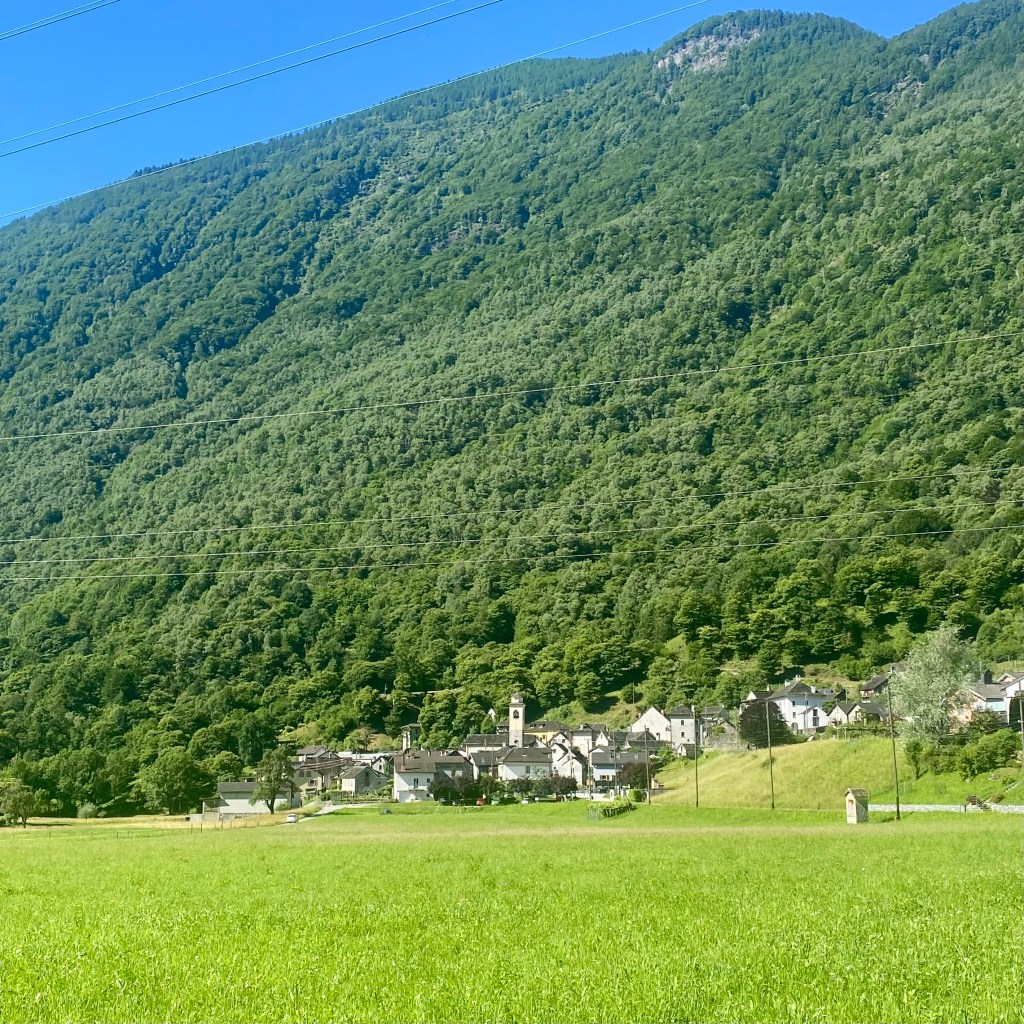
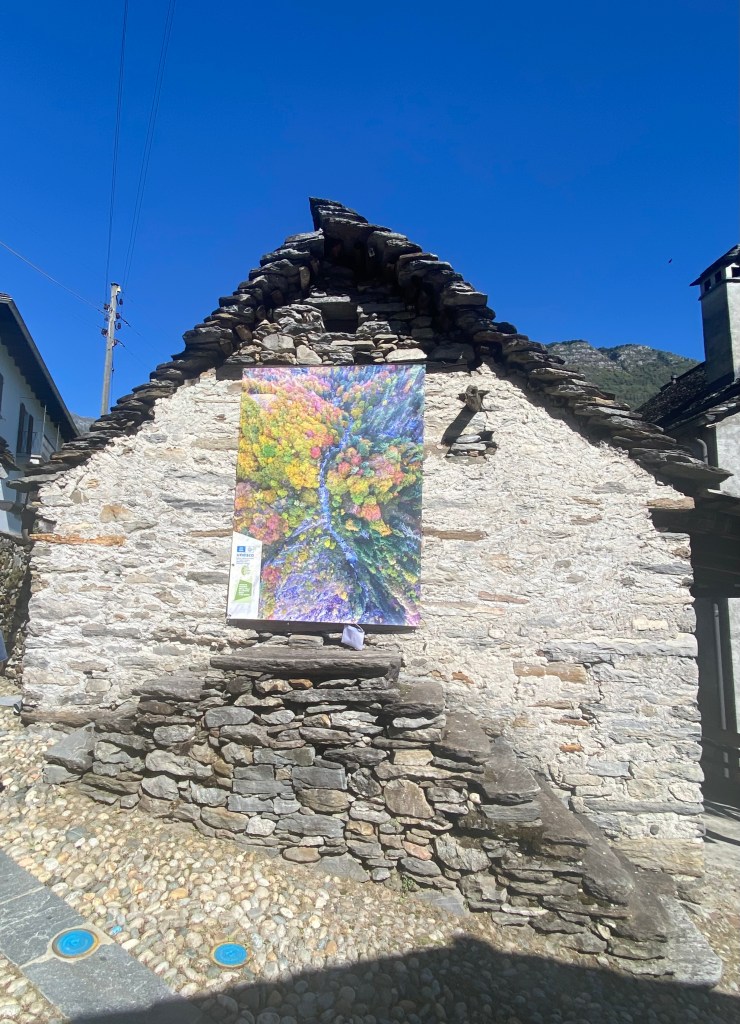
The village of Lodano in Switzerland fits into its landscape. The buildings, most of which date to the 17th century, are constructed almost entirely of natural stone with modest architectural adornments and no paint. A meadow occupies the area between the Maggia River, which historically flowed out over its banks, and the flank of the valley where the village is perched at the base of the steep valley wall. The border line of trees in the Valle di Lodano has moved with the economy of the region, logging and animal agriculture pushed it up high, and then as industrialization and emigration occurred, the forest returned. Now, it reminds me that our choices — our science, our economy, our culture, and our politics — shape what life will look like for both trees and humans.


One thought on “The Beech Forest of Valle di Lodano”