
I was invited to to speak at a No Kings rally in Chesaning, Michigan. I declined because I had a conflict that then did not materialize. I am still glad I didn’t speak. But here is what I would have said:
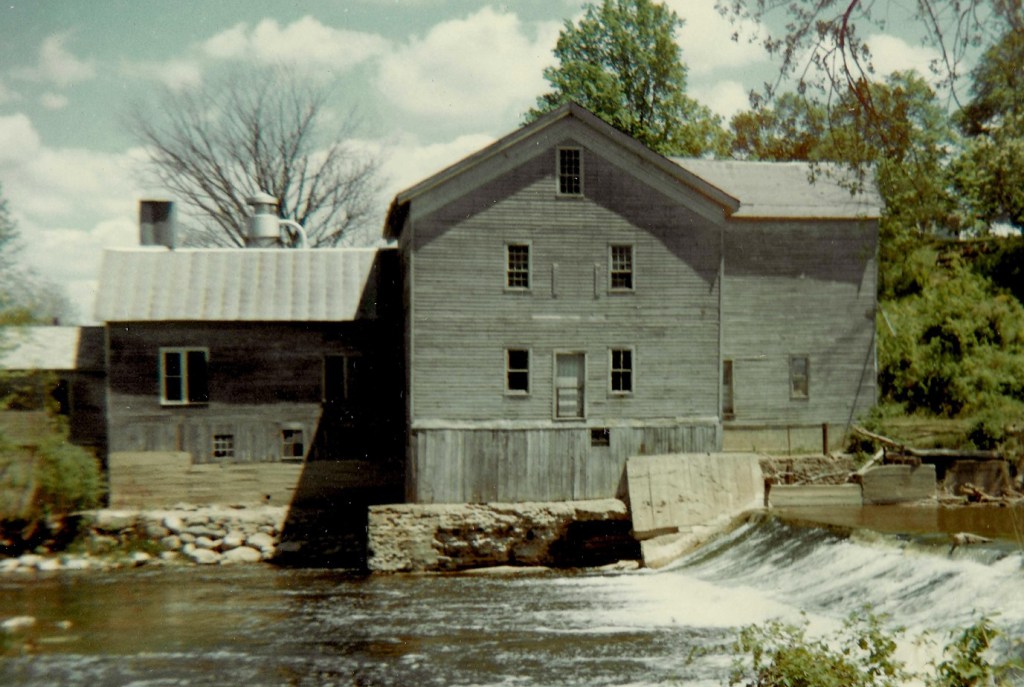
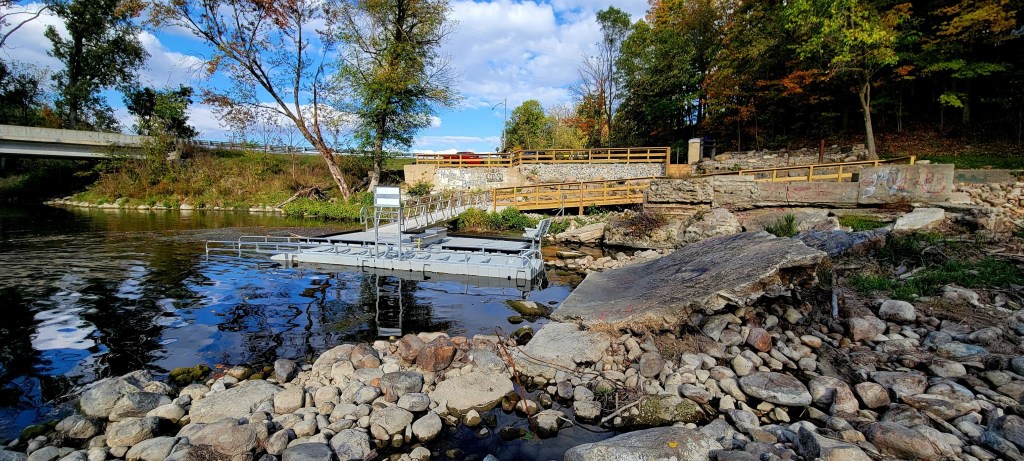
“Look around us. We are on the banks of the Shiawassee River. In a public park. In the town many of you grew up in. Just over there you will find a new kayak dock. There’s one just like it upstream in Parshallburg. My grandfather as a young man drove a load of wheat to the mill that used to be there.
This is America. We are rooted in places like this. This is where our values come from. We are here today to speak up for those values. We are here to show up for democracy, the 250 year old system that embodies those values. We are here to defend and celebrate the opportunity my ancestors had to move here, and to pursue life, liberty, and the pursuit of happiness.
Today, much threatens the democracy we live in. America is under stress for lots of reasons and many of us have lost faith in those who represent us; too many of us have lost faith in each other. We worry about our neighbors, and our families, that share this place where we live.
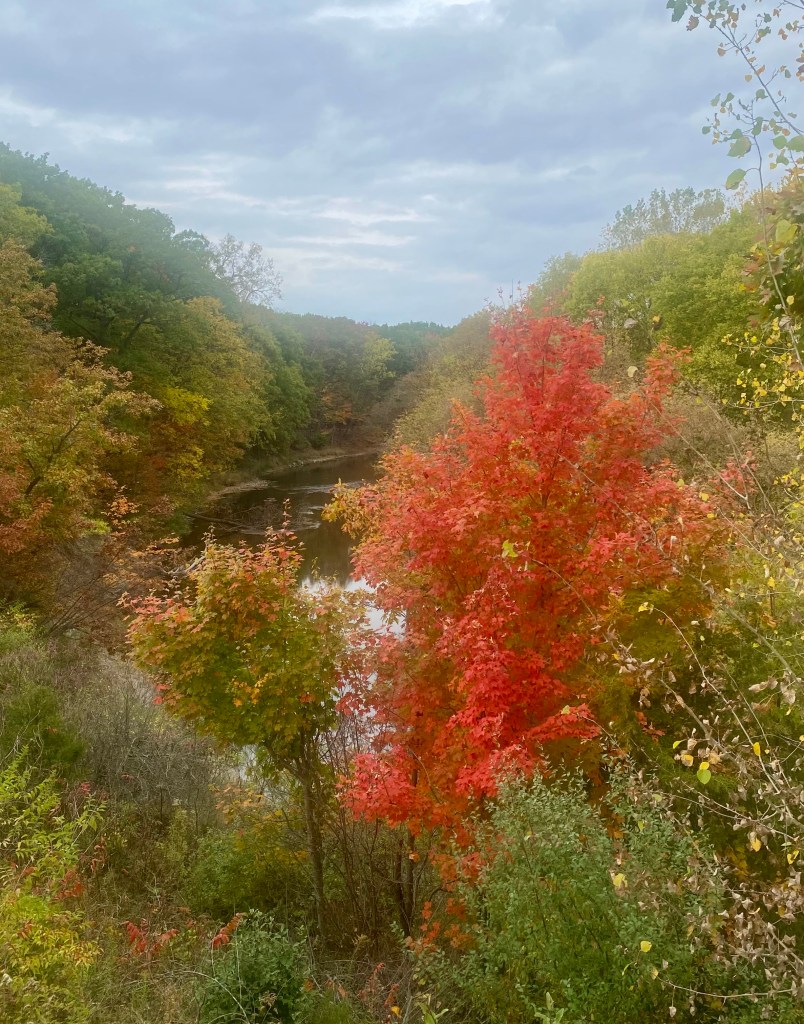
Sadly, we also need to worry about the natural world that makes this place special: the river, the woods which give us the beautiful colors of fall, the fields in which we grow our food, and the clean air and clean water that nature provides us.”
I would have gone on from there to talk about the current crisis in conservation, the retreat from the environmental laws that have been one of the great successes of the last 60 years in America, and the wilful ignorance of the realities of the changes in climate we have all caused. I was happy that Peter Sinclair spoke instead; he is smarter than I am and has a better command of the facts. I am glad he gives voice to this effort in several ways (find his current writing here).
It turned out the trip I had planned for No Kings Day was cancelled at the last minute, but to be honest, I was glad to have had the excuse not to speak. I was hesitant to take part in what may be a partisan effort. And it was true that a member of Congress from the Democratic Party spoke, and that the supporters of the Republican Party were not visibly in attendance. Though, the guy next door who revved a loud engine during the event may have voted for the current President.
I am not a partisan guy (my parents were Republican, and I worked once for a Republican Governor, but I have most often–but far from always-voted for Democrats) so I shied away from the opportunity to speak at this event. But before any political affiliation, I am first and foremost a conservationist (call me an environmentalist or tree-hugger and I won’t be offended) as were my parents.
But now, the day after, I am mad that I let the partisanship that threatens our country, and our planet, prevent me from speaking. To care about the place we live–its rivers and forests and soil–is not to take a partisan position. Wanting to do something about the carbon dioxide that is building up in our atmosphere and changing the weather should not make me a Democrat. Today, sadly, I realize that this is now the case.
As the 1990s started, and the issue of climate change became more widely known, both Republicans and Democrats accepted the science and shared a concern about the impacts of a warming planet (see the data in “Polarisation of Climate and Environmental Attitudes in the United States, 1973-2022 ” a comprehensive, peer-reviewed article). Since then, voters have become more and more polarized. In 2008, the Presidential candidates of the two leading parties, Barack Obama and John McCain, endorsed policy actions to address climate change.
Aside from the climate issue, I have been deeply troubled by the gradual, but now almost complete, abandonment of pro-conservation policies by Republican candidates at every level of government. For several years, I traveled to Washington DC to meet with members of Congress to advocate for protection of the Great Lakes, funding for the purchase of recreational land and critical habitats, strong farm bill programs to promote soil health, and federal efforts to protect endangered species like the Kirtland’s Warbler. I was generally met with a positive response, and both Democrats and Republicans supported the legislation for which I advocated. Even President Trump supported and signed the Great American Outdoors Act, one of the most significant pieces of legislation passed during his first term.. (See “Mr. Cook Goes to Washington”)
Thus, I am baffled and troubled by the current political situation in which environmental issues are either ignored, or its supporters demonized, by the current Administration and the members of Congress who line up with him. We all want (I think) clean air and water and healthy food. Getting outdoors–camping, hiking, hunting, fishing, birdwatching, and more–are activities enjoyed by most Americans of both parties. The change in the climate and the increasing number of floods, fires, hurricanes and storms seems an undeniable fact. Why is the Republican Party seemingly ignoring all of these realities?
I think I know the answer, and it’s why I went to the No Kings rally: because democracy is broken, or because the electorate is disengaged, or because of a campaign of misinformation, or because the oil and gas industry and others with a vested interest have taken advantage of weaknesses to capture the Republican Party. Or all of the above.
What’s the solution? Many of the people at No Kings rallies have the idea that the current President and his party need to be removed, or at least distanced, from power in the next election. I cannot say they are wrong. However, the question then becomes, “What next?”
Egged on by loud voices from both sides, we have been caught in a cycle for at least the last 10 years of giving power to one party or the other who then uses it to push through as much of their agenda as they can during their time in office. We can debate why, or blame one party or the other for the extreme partisanship, or tally up the winners and losers on each side, but from my perspective, the voice of nature has been drowned out by the partisan bickering. There were a lot of signs at No Kings rallies, but not many of them gave voice to nature. Environmental concerns rank low on the list of voter concerns. I was at a conference the other day and a speaker said “no one is going to run on a platform of restoring the EPA.”
The answer that came to me again, standing on the banks of the Shiawassee River, was that we need to rebuild democracy from the bottom up, starting with the places, and people, we love. Increasingly, the social media and political machinery wants to force us into one camp or another. Too many of our elected officials, and their funders, gain by creating division, and enjoy the fight of one side versus the other. I believe most people are repelled by this fight (or perhaps I fear the people who are attracted to this political warfare) and disengage from democracy.
About the same time as the country began to come apart on environmental issues, I came together with people to start the Friends of the Shiawassee River. At those early meetings, no one asked, and no one cared, what party anyone was. Together, we went on to do important things: organize a river clean-up every year for three decades, help take out two aging dams, and be part of an effort to establish the Shiawassee River National Water Trail.
The love of place persists, and this gives me hope. It may start with a river, or the wildlife refuge to which the Shiawassee flows, or Saginaw Bay and the Great Lakes which are further downstream, but I find that people identify with and care about the natural world around them. But place is not just the natural world: the towns, the schools, the businesses, the hospitals, the parks and all manner of collective human effort define the places we love.
The places we live in and love were not created by political parties or Presidents or Kings. While individual actions always make a difference, our communities exist, and thrive, because of collective effort. Some of that collaboration takes place in the marketplace, some of it grows out of the free association of the residents (new and old) in a place, and a small but important part of it comes from the democratic processes our forefathers (and their wives) designed 250 years ago.
Democracy is not a structure or tool we can use for our own benefit, though people have and continue to try to capture it to promote their own agenda. Rather, it is a dynamic process that we are all a part of. We have over the years worked to improve it. We have redefined democracy to include more of the people who live in this place we call America. Collectively, we are responsible for the results of the government that represents us. If we don’t like the outcome, we have to work–together–to change it.
For this reason I decided to go to a rally yesterday. I thought perhaps I should go to Lansing where the event made more of a political statement. But because I love this place on the Shiawassee River, I am glad I went to a rally in the small town of Chesaning, Michigan.

 Walks with Tom